
Coachability
When Should a Coach Refer an Athlete for Mental Performance Help?
A practical four-signal referral guide for head coaches and athletic directors that protects athlete autonomy and distinguishes coaching from clinical care.
By Philip Coffman · Founder, iBE Performance ·
A team coach should consider involving a mental performance coach when a recurring focus, composure, confidence, or mistake-recovery problem persists after suitable sport practice and the athlete wants additional skill development. That does not mean the head coach has failed.
When substantial distress, impairment, safety concerns, or possible clinical symptoms appear, the next step is different: use qualified healthcare or safeguarding support. A mental performance coach does not diagnose or treat mental-health disorders.
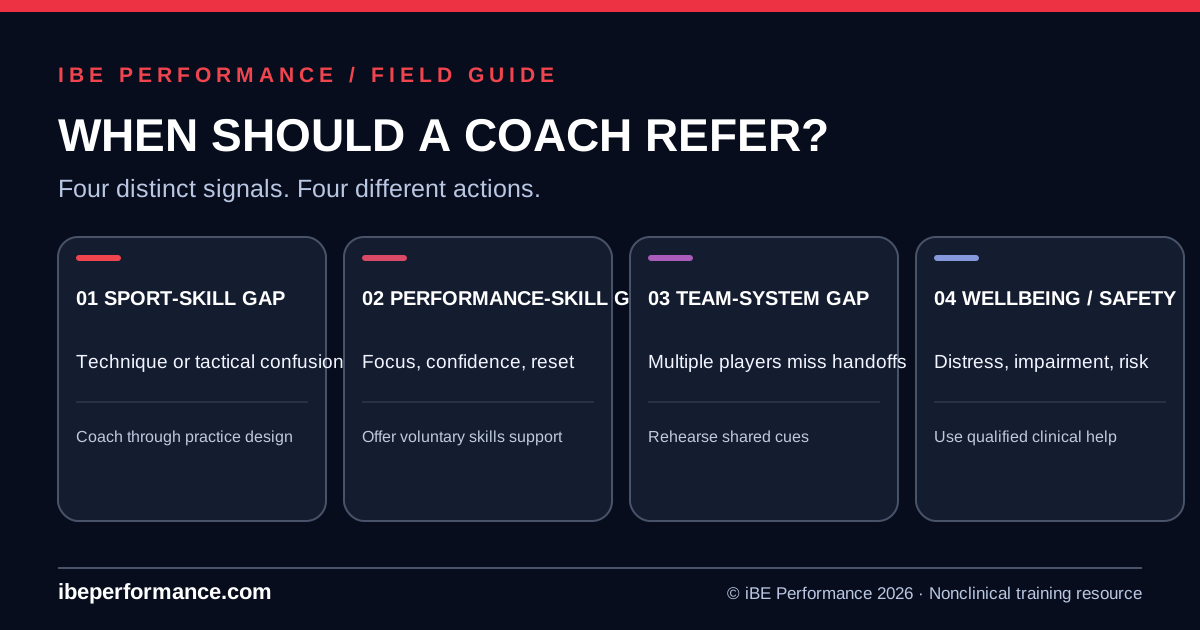
The Four-Signal Coach Referral Framework
Start by identifying what is actually happening rather than labeling an athlete 'mentally weak'. These four signals lead to different, sometimes overlapping supports.
- 1. Technical or tactical confusion: if the athlete does not know the correct action, use sport instruction, practice design, and coaching feedback first.
- 2. Persistent performance-skill gap: if the skill is rehearsed in practice but attention, reset, or composure routinely breaks down in competition, ask whether the athlete wants focused mental-skills coaching.
- 3. Team communication under pressure: if multiple athletes miss the same handoff or recovery call, fix the shared cue and practice environment; consider a team-level session.
- 4. Distress, impairment, or safety concern: follow safeguarding rules and refer promptly to an appropriately licensed clinician, counselor, medical professional, or emergency service as warranted. Do not route urgent concerns through a performance intake.
Four Questions to Ask the Athlete Without Diagnosing
Speak privately and without threatening playing time. Ask what the athlete noticed during the situation, what was hardest about the next action, what they have already tried, and whether they would welcome help with a specific trainable skill.
Ask separately whether something outside sport is affecting wellbeing. A coach should not try to perform a clinical assessment. For minors, follow guardian involvement, privacy, consent, and school or league safeguarding requirements.
A Simple Next-Play Example
A player loses possession, stops communicating, and misses the next defensive assignment. Review what they perceived, what they decided, and what they did—the IBE PDE sequence. Then practice a brief next-play reset and a specific communication cue in normal training.
If several players make the same error, examine team standards and coaching instructions first. If one athlete repeatedly loses the cue across appropriate practice opportunities and asks for additional help, individual mental-skills support may be useful.
How a Head Coach and Mental Performance Coach Can Collaborate
Agree on scope before sessions begin. The head coach retains responsibility for sport tactics, lineup decisions, and training. Performance coaching focuses on trainable attention, confidence, routines, communication, and response skills.
Athletes should understand what is private and what, if anything, can be shared with staff. Sharing personal reflections, especially for minors, requires appropriate authorization and safeguarding practices. I do not use private mental-skills conversations as a hidden scouting report.
What an Athletic Director Can Evaluate
Track observable practice behavior, such as whether a reset cue is used after a mistake or a communication call occurs after a possession change. Record context and avoid ranking athletes by supposed psychological traits.
A school program might pilot one ten-minute pressure-response drill, review player and staff feedback, and decide whether broader support makes sense.
Frequently Asked Questions
Mental Performance Coaching FAQ
Should a sport coach handle all performance anxiety?
No. Coaches can teach nonclinical sport routines but should not diagnose, treat, or minimize clinical distress. Safeguarding and appropriately licensed services take priority when indicated.
Will outside mental performance coaching interfere with my team?
It should not. Agree on roles, athlete choice, privacy boundaries and observable practice objectives before collaboration begins.
Turn This Guide Into a Practical Plan
Build a response for your actual performance environment.
Start with a focused consultation to discuss your specific situation, determine fit, and identify the right next step. If measurement would add useful evidence, an assessment can follow the conversation.
More Guides Like This
Coachability
When pressure increases, athletes may hear several urgent instructions but have only enough time to execute one clear next action. Try the original IBE Coach Cue Audit exercise, with complete steps and research references.
Mental Performance
A field guide for bringing nonclinical mental skills into an athletic department without crowding the practice schedule or replacing student support.
Team Culture
Teams don't lose talent under pressure. They lose communication. Install the language before the game needs it.