
Pressure Response
Audition Nerves: A Practical Reset for Actors and Musicians
The goal is not to eliminate every nerve before an audition. It is to rehearse the first controllable performance action.
By Philip Coffman · Founder, iBE Performance ·
Audition nerves can pull attention away from the opening line, first note, entrance cue, or partner's response. A nonclinical stage-entry routine can help a performer focus on a task they have rehearsed. It does not treat anxiety disorders or guarantee a fearless performance.
IBE approaches the first seconds onstage as a trainable perception–decision–execution moment: notice what is happening, choose the useful cue, and act on it.
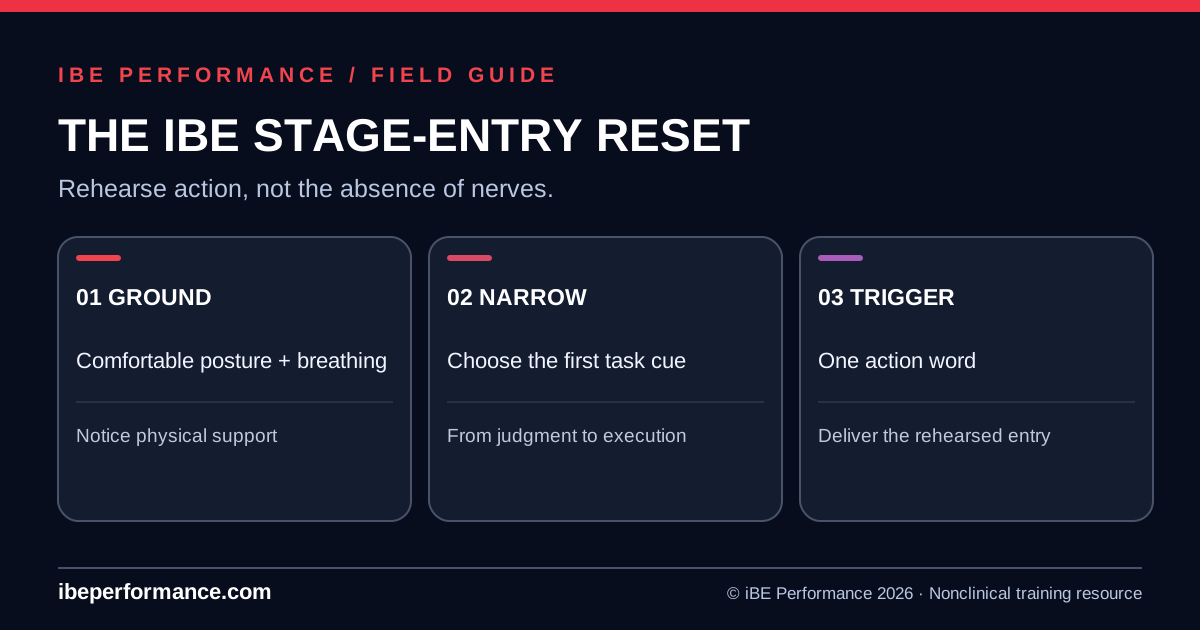
The IBE Three-Step Stage-Entry Reset
Rehearse this sequence before ordinary run-throughs, not only at a major audition. The durations are adjustable examples rather than a medically validated formula.
- Ground (about 20–30 seconds): notice where your feet, instrument, or hands meet their support. Breathe comfortably rather than forcing a specific rate or trying to suppress bodily sensations.
- Narrow (about 30–60 seconds): direct attention from an imagined audience judgment to one concrete task cue—the first lyric, entry mark, conductor's gesture, or partner's opening line.
- Trigger (about 5–10 seconds): use a brief action word such as 'listen', 'enter', or 'release', then commit to the first rehearsed movement or sound.
What to Do When a Mistake Happens Mid-Performance
A performer cannot rewind the missed note or forgotten line. Use a next-cue reset: notice the error without continuing to narrate it, locate the current musical or scene reference, and act on the next available beat.
Practice this deliberately in rehearsal by introducing a harmless interruption and rehearsing recovery. Avoid unsafe technical, rigging, or stage effects while simulating pressure.
How to Train for Audition Conditions
First rehearse in a quiet familiar space. Next, try the entry with an observer or camera. Later, vary timing, walking distance, or a realistic waiting period. Keep the exposure proportionate and voluntary rather than overwhelming the performer.
For actors, an initial partner cue may be the focus target. For musicians, it may be the first breath or conductor cue. For public speakers, it may be the first sentence delivered to one audience member.
Measure Readiness Without Scoring Your Worth
After each rehearsal, record whether you used the first cue, whether you entered on time, and whether a mistake disrupted the next action. These process measures are more usable than scoring whether you felt completely confident.
Persistent panic, distress or broad functional impairment calls for an appropriately licensed professional. Practical performance coaching may complement, but does not replace, that care.
Frequently Asked Questions
Mental Performance Coaching FAQ
Does the reset stop stage fright?
No routine guarantees that. It offers a rehearsable attention and action sequence even when nerves remain present.
Should I practice the reset only on audition day?
Practice during ordinary rehearsals first and adapt it to your own performance demands.
Turn This Guide Into a Practical Plan
Build a response for your actual performance environment.
Start with a focused consultation to discuss your specific situation, determine fit, and identify the right next step. If measurement would add useful evidence, an assessment can follow the conversation.
More Guides Like This
Pressure Response
When the lights come on, attention may shift to the audience and the outcome. Build a simple plan for your first action and your recovery after a mistake.
Composure
A rehearsal-based entrance routine for musicians, actors, and speakers to direct attention toward performance tasks despite stage nerves.
Composure
A live entrance mixes preparation with uncertain audience response. Trying to force calm or eliminate all nervousness can compete with the opening action. Try the original IBE Stage-Entry Anchor Rehearsal exercise, with complete steps and research references.